

Hard Chess Puzzles: Solve Difficult Positions & Improve
Hard chess puzzles feel impossible - until you know how to approach them. Learn what makes a puzzle difficult and how solving them boosts your game.
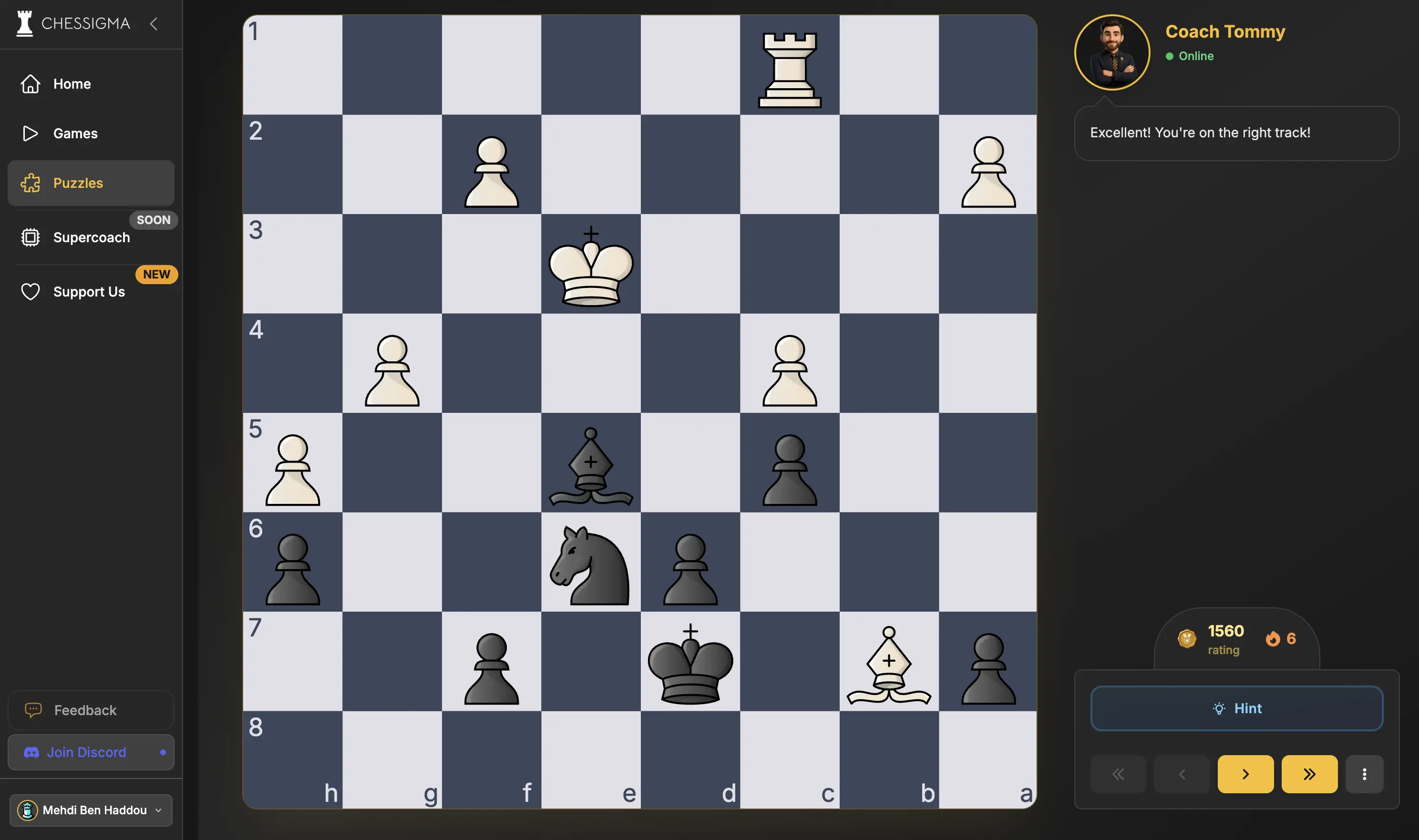
You stare at a hard chess puzzle for three minutes and see nothing. Every move looks wrong. Your brain wants to quit. Good - that's exactly where improvement lives. Difficult chess puzzles aren't supposed to feel comfortable. The discomfort is the point. It means you're building something new.
What Makes a Chess Puzzle Hard?
It's not just "lots of pieces on the board." What makes chess puzzles hard is specific and identifiable. Once you know what you're up against, you can train for it.
Long calculation sequences. Easy puzzles resolve in 2-3 moves. Hard ones demand you hold 5, 6, or 7 moves in your head without touching the board. Each branch multiplies the mental load.
Quiet moves. These are the killers. A quiet move doesn't check, doesn't capture, doesn't even look threatening - but it sets up something unstoppable two moves later. Your brain naturally filters these out because they don't "feel" like puzzle moves. That's why they work.
Multiple plausible candidates. When three moves all look reasonable, you can't just pattern-match your way to the answer. You have to calculate each line to its end and compare. This is where most players give up.
Counterintuitive sacrifices. The correct move might be giving away your queen or allowing a seemingly losing trade. It feels wrong for 4 moves before it suddenly works. Your instincts scream "no" - but the tactic says "yes."
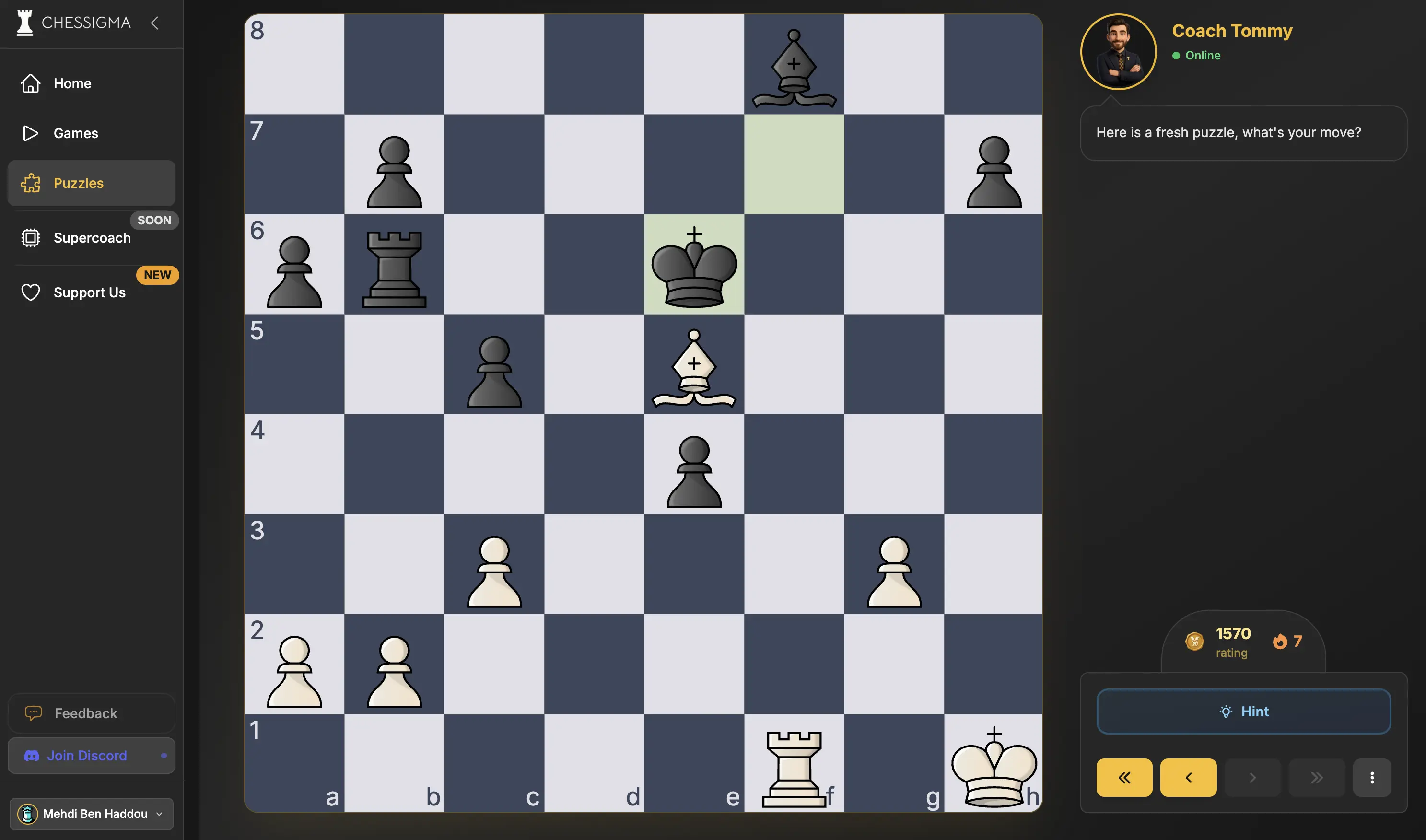
Hard puzzles often have multiple plausible moves - only deep calculation reveals the right one
Why Solving Hard Chess Puzzles Makes You Better Faster
Easy puzzles confirm what you already know. You see a pattern, you play it, you feel good. But you didn't actually learn anything. Your brain ran an existing program. No new connections formed.
Hard chess puzzles force your brain into deliberate practice - the kind of focused struggle that actually builds skill. When you stare at a position and can't find the answer, your brain is actively constructing new pattern recognition pathways. That painful feeling of "I can't see it" is your neural circuits rewiring in real time.
Research on skill acquisition is clear: improvement happens at the edge of your ability, not in the comfort zone. A pianist doesn't get better by playing songs they've already mastered. A weightlifter doesn't grow by lifting the same weight forever. Chess is no different.
Here's what most players miss: even getting a difficult chess puzzle wrong is valuable - if you study the solution afterward. The moment you see the line you missed, your brain catalogs it. Next time a similar pattern appears, you'll recognize it faster. Failed attempts followed by understanding are the fastest path to improvement.
The players who plateau at 1200 or 1500 are almost always the ones solving puzzles below their level. They feel productive. They're not. Push into discomfort. That's where the rating points are.
How to Approach Hard Chess Puzzles Without Giving Up
To solve hard chess puzzles, start by scanning for checks, captures, and threats - in that order. Then look for the move that makes no sense at first glance. Set a strict time limit, and if you don't find it, study the solution instead of guessing. The process matters more than the solve rate.
- Checks, captures, and threats - in that order. This is your scanning framework. Every forcing move on the board gets evaluated before anything else. Most hard puzzles start here, even when the answer isn't a forcing move. You need to rule out the obvious before you can spot the subtle.
- Look for the move that makes no sense. Once you've exhausted the forcing lines, ask yourself: "Is there a quiet move that creates an unstoppable threat?" A bishop retreat. A rook lift to a strange square. A pawn push that looks pointless. These are the moves that separate 1200 from 1800.
- Count the defenders around the enemy king. How many pieces protect the king? How many squares can it flee to? If the king is down to one or two escape routes, there's almost certainly a tactic that seals them off. Work backward from the checkmate position.
- Calculate the line you think is wrong anyway. Your gut says a move doesn't work? Calculate it to the end. In hard puzzles, the "wrong" move is often right - you just hadn't calculated deep enough to see it. Trust the math over your instincts.
- Set a 5-minute time limit. If you haven't solved it in 5 minutes, stop and look at the solution. Staring at a puzzle for 20 minutes builds frustration, not pattern recognition. The learning happens when you see the answer and understand why you missed it - not when you eventually guess it by elimination.
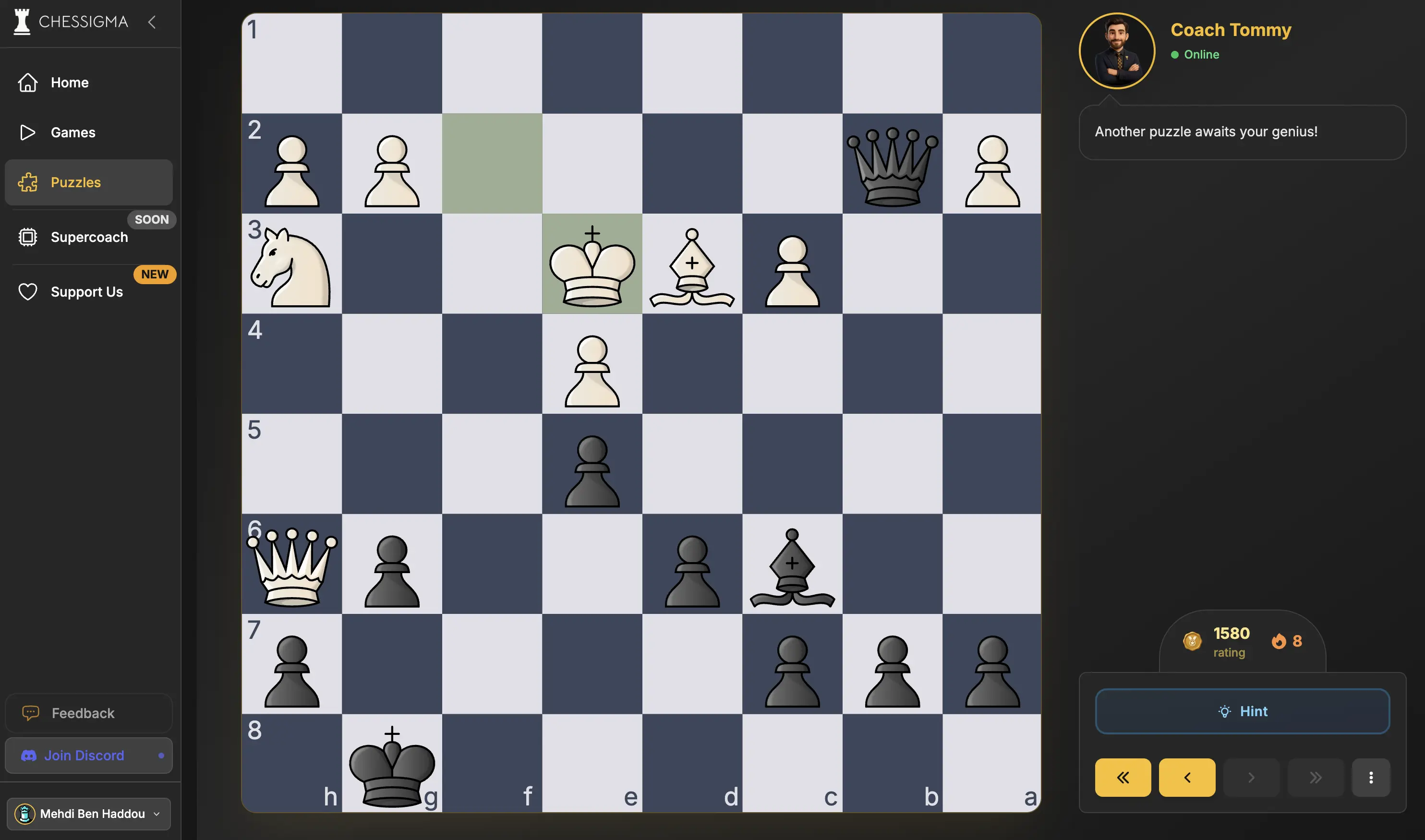
Chessigma's puzzle trainer matches difficulty to your Elo for optimal improvement
The Hardest Chess Puzzles and What They Have in Common
The hardest chess puzzles share a few recurring traits. Understanding them won't make the puzzles easy - but it will tell you where to look.
Quiet moves dominate. The absolute hardest puzzles almost always hinge on a non-capturing, non-checking move. A piece repositions to a square that looks passive but creates a threat that can't be met. These moves are invisible to players who only scan for forcing lines.
Long forced sequences. Some puzzles require you to sacrifice material on move one and not see the payoff until move six or seven. You're essentially playing blind for several moves, trusting your calculation. One wrong turn and the whole line collapses.
Sacrifices that look losing. The hardest puzzles ask you to give up your queen, both rooks, or allow a seemingly devastating counter-attack - and be right about it. The deeper the sacrifice, the harder the puzzle. Your brain has to override every instinct that says "protect your material."
Start With These Before Tackling the Hardest Chess Puzzles
If you're solving fewer than half the hard puzzles you attempt, you're probably jumping ahead. Build your foundation first. Start with mate in 2 chess puzzles to lock in basic checkmate patterns and forcing move calculation. Once those feel routine, move to mate in 3 chess puzzles to extend your calculation depth by one move.
The natural progression is mate in 2, mate in 3, then open-ended hard puzzles where the solution length is unknown. Each stage builds the mental muscle for the next. Skip steps and you'll hit a wall. Follow the progression and the hardest chess puzzles become solvable - not easy, but solvable.
Ready to test yourself? Chessigma's puzzle trainer serves hard chess puzzles matched to your Elo - so you're always solving at the edge of your ability, not below it.
Start solving hard puzzles (FREE)Frequently Asked Questions
What makes chess puzzles hard?
Three things: deep calculation requirements (5+ moves ahead), quiet moves that don't check or capture but create unstoppable threats, and positions with multiple candidate moves that all look plausible. The combination of these forces you to calculate every line to its end.
How do I get better at hard chess puzzles?
Deliberate practice - not volume. Focus on the process: scan for forcing moves, look for quiet moves, calculate lines fully before committing. When you fail, study the solution until you understand why that move works. Improvement comes from understanding failures, not accumulating easy solves.
Should beginners solve hard chess puzzles?
No. Start with mate in 2 puzzles to build basic pattern recognition and forcing move calculation. Move to mate in 3 once those feel routine. Hard puzzles are most valuable when you already have a foundation - otherwise you're just guessing, which builds nothing.
How long should I spend on a difficult chess puzzle?
Five minutes maximum. After that, look at the solution and study why it works. Extended staring builds frustration, not skill. The real learning happens in the gap between your failed attempt and understanding the correct line - not in the struggle itself.
What is the hardest type of chess puzzle?
Quiet move puzzles and long sacrificial sequences. Quiet moves are nearly invisible because they don't check or capture - your brain skips them naturally. Long sacrificial lines require you to trust your calculation for 5+ moves while your material disappears. Both demand skills that only come from targeted practice.
Do hard chess puzzles improve your rating?
Yes - more effectively than easy ones. Easy puzzles reinforce existing patterns. Hard puzzles build new ones. Struggling at the edge of your ability forces your brain to create new recognition pathways. Players who consistently solve puzzles slightly above their level see faster rating gains than those who grind easy tactics.
Keep Reading
Chess Puzzles Mate in 2: How to Solve Them (With Examples) - build your checkmate pattern foundation.
Chess Puzzles Mate in 3: Step Up Your Calculation - extend your tactical depth before tackling hard puzzles.
How to Analyze Your Chess Games: Complete Guide - turn your game mistakes into targeted improvement.