

Chess Puzzles Mate in 2: How to Solve Them (With Examples)
Learn how to solve chess puzzles mate in 2 with step-by-step examples from easy to hard. Free practice on Chessigma - no account needed.
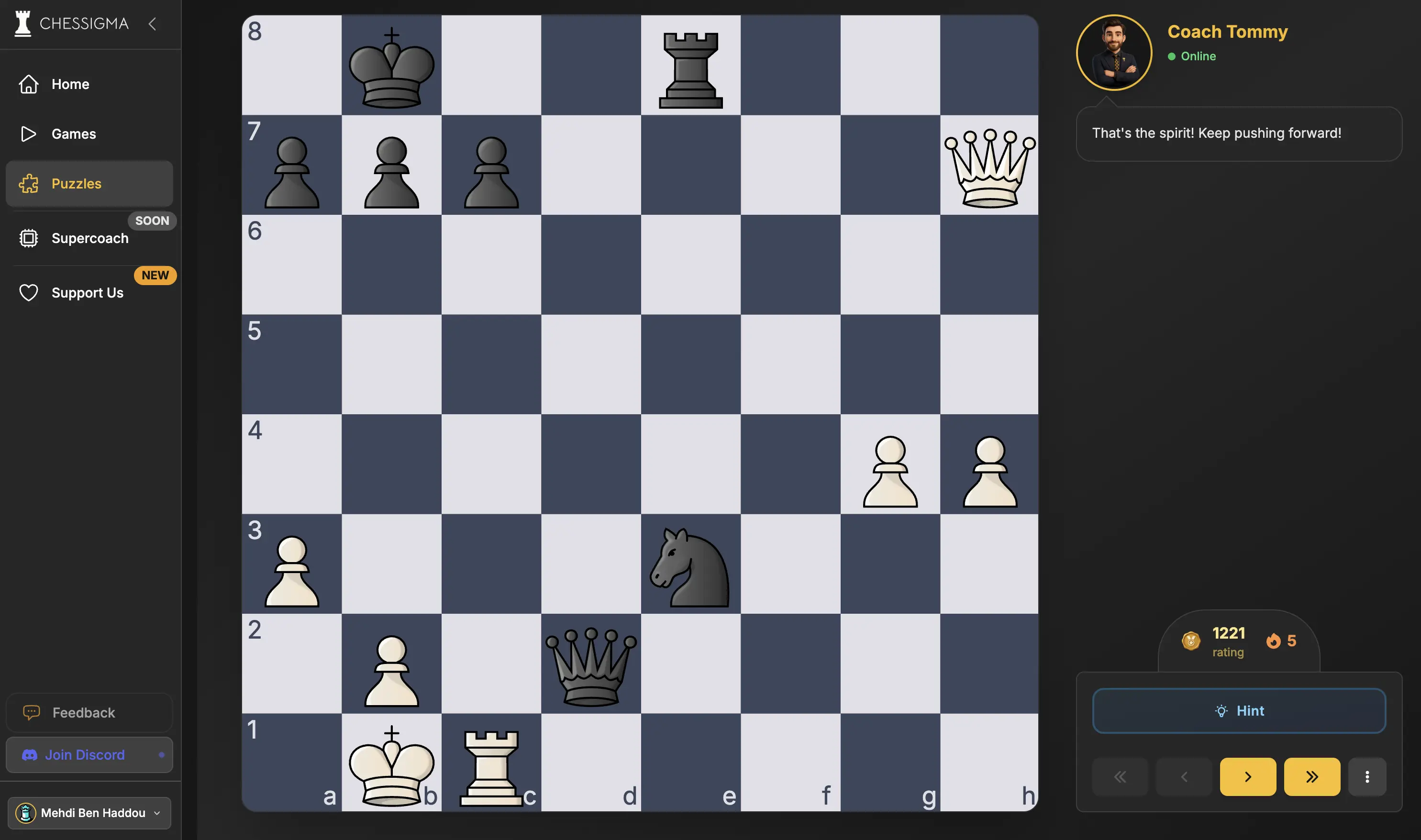
Chess puzzles mate in 2 are positions where you must deliver checkmate in exactly two moves. They're the most effective tactics drill for building pattern recognition - short enough to solve quickly, deep enough to require real calculation.
What Is a Mate in 2 Chess Puzzle?
A mate in 2 puzzle gives you a position where White (or sometimes Black) can force checkmate in exactly two moves, regardless of how the opponent responds. You play move one, your opponent makes their best defensive move, and your second move is checkmate. No alternatives - only one correct first move works.
These are a staple of chess training because they force you to calculate forcing sequences - checks, captures, and threats that limit your opponent's options. You can't guess your way through mate in 2 chess puzzles. You have to see the whole line before you move. That's exactly the skill that transfers to real games.
How to Solve Chess Puzzles Mate in 2 - Step by Step
- Look for checks first - which pieces can give check?
- Identify forcing moves - moves the opponent MUST respond to
- Eliminate responses - does every opponent reply lead to checkmate on move 2?
- Verify the solution - confirm no escape square exists
Step 1 is your starting point. Scan every piece that can deliver check. Most mate in 2 positions involve a check on move one - but not always. The trickiest puzzles start with a quiet move that sets up an unstoppable checkmate threat.
Step 2 narrows your candidates. A forcing move is one your opponent can't ignore - a check, a capture, or a direct mate threat. If the first move isn't forcing, it must create a threat so strong that every response still loses.
Step 3 is where most players fail. You found a promising first move - but does it work against every possible reply? In chess mate in 2 puzzles, you must verify that all defensive options lead to checkmate on your second move. One escape and the whole solution falls apart.
Step 4 is your final check. Walk through the position after your second move. Is the king actually trapped? No flight squares, no blocks, no captures of the attacking piece? Only then is the puzzle solved.
Easy Chess Puzzles Mate in 2 (Beginner Examples)
Easy chess puzzles mate in 2 typically feature limited pieces on the board and obvious checking patterns - back-rank mates, queen + rook combos, and king-corner traps. Here are two beginner-level examples.
Example 1: Back-Rank Mate
White: Rook on a1, Rook on d1, King on g1. Black: King on g8, pawns on f7, g7, h7. The black king is boxed in by its own pawns - a classic back-rank setup.
Solution: 1. Rd8+ forces the rook to the eighth rank with check. Black has no way to block or capture. The king stays on g8. 2. Ra8# - the second rook delivers checkmate on the back rank. Two rooks, two moves, game over.
Example 2: Queen + Rook Ladder
White: Queen on h5, Rook on a1, King on e1. Black: King on e8, no other pieces. The black king sits exposed on the back rank with no defenders.
Solution: 1. Qe5+ cuts off the king's escape. Black must play Kd8 (or Kf8). 2. Ra8# - the rook slides to the eighth rank for checkmate. The queen controls every escape square. Clean and efficient.
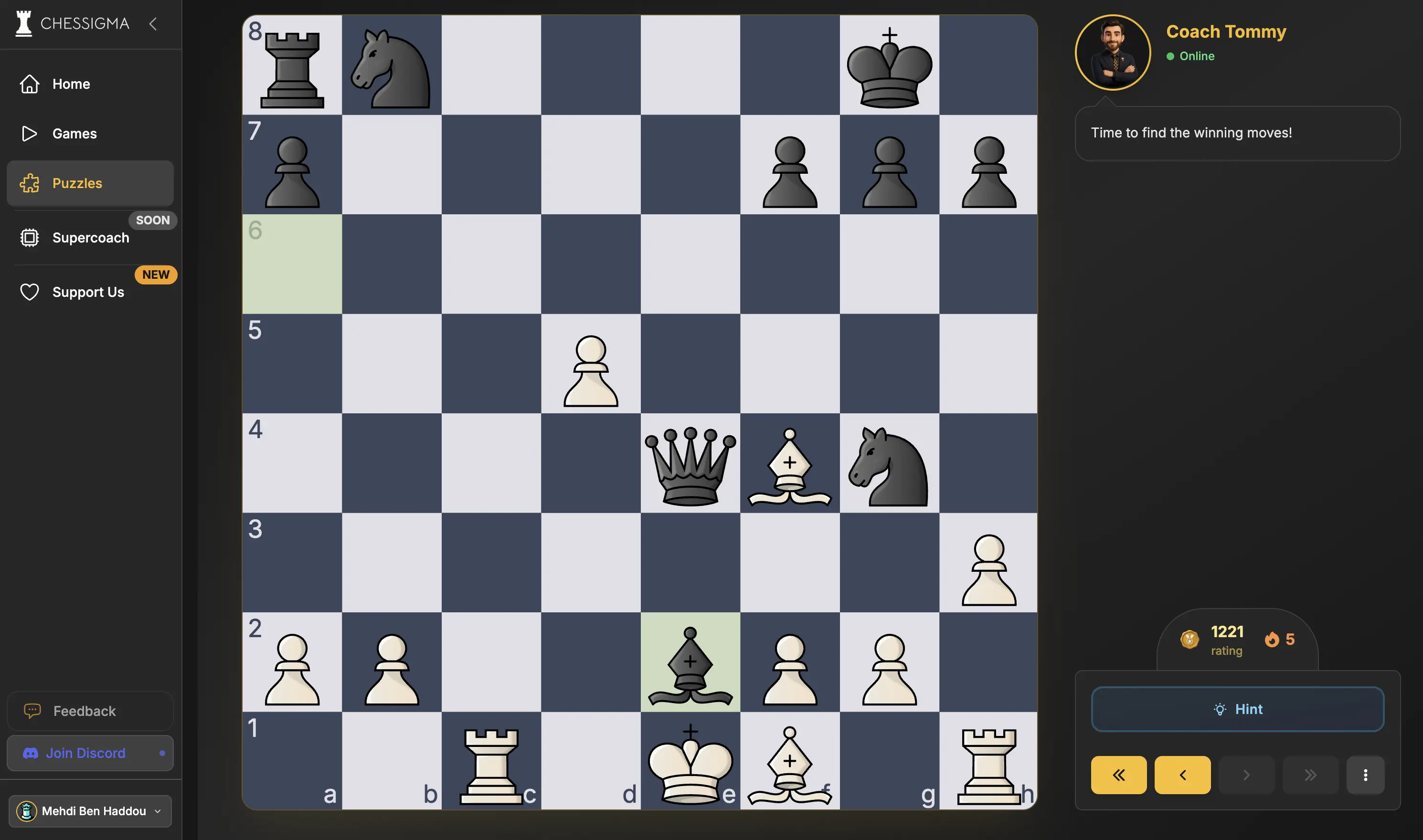
Back-rank patterns are the foundation of beginner mate in 2 puzzles
Hard Chess Puzzles Mate in 2 (Advanced Examples)
Hard chess puzzles mate in 2 are a different beast. The first move is often a quiet move - no check, no capture, sometimes even a sacrifice. The key idea is creating a position where every possible response leads to forced checkmate. These require deeper visualization and pattern recognition built through consistent practice.
Example 1: The Quiet Move
White: Queen on d1, Bishop on c1, King on a1. Black: King on h1, pawn on g2, pawn on h2. No check is available on move one. The obvious Qd5+ doesn't work because the king escapes.
Solution: 1. Qd5! - a quiet move threatening Qh5#. Black's only moves are pawn pushes (g1=Q or h1=Q), but neither blocks the diagonal. 2. Qh5# is mate regardless. The non-obvious first move is what makes this hard.
Example 2: The Sacrifice
White: Queen on f3, Rook on h1, Bishop on e5, King on a2. Black: King on g1, Rook on f1. White has a forced mate, but it requires giving up the queen first.
Solution: 1. Qf2+! Kxf2 (forced - the king must capture). 2. Rh2# - the rook delivers checkmate with the bishop covering the escape. Sacrificing the strongest piece to set up a discovered checkmate - that's the beauty of hard mate in 2 puzzles.
Solved them? Try them against the clock in a timed checkmate puzzle rush: two minutes, from mate in 1 to the classic endings.
Why Mate in 2 Puzzles Are the Best Training Tool
Chess puzzles mate in 2 hit the sweet spot for tactical training. They're short enough to solve in 2-3 minutes but long enough to require genuine calculation. You can't fake your way through them - you either see the mate or you don't.
The real value is pattern recognition built through repetition. Back-rank mates, smothered mates, queen sacrifices - once you've solved 50 of each pattern, they become automatic in your games. You stop calculating and start recognizing.
Players who drill tactics consistently improve faster than those who study openings or endgames alone. Solving 10-15 mate in 2 puzzles daily is more effective than long study sessions once a week. Short, focused, daily. That's the formula.
How Many Mate in 2 Puzzles Should You Solve Per Day?
10-15 puzzles daily is the sweet spot. Consistency beats volume every time. Solving a handful of puzzles with full concentration builds stronger pattern recognition than grinding 100 puzzles on autopilot.
A daily habit creates distinct learning events with overnight consolidation - your brain wires patterns into long-term memory while you sleep. Weekend marathon sessions give you one consolidation cycle. Daily practice gives you seven. The math speaks for itself.
💡 Pro tip: Solve puzzles in the morning with a fresh brain. Pair it with your coffee and it becomes automatic within a week.
Ready to Start Solving?
Stop reading about tactics. Start drilling them. Chessigma gives you unlimited free chess puzzles - including mate in 2 positions - with no account required and no daily limits.
Your pattern recognition is waiting to be built.
Frequently Asked Questions
What is a mate in 2 chess puzzle?
A mate in 2 puzzle is a chess position where one side can force checkmate in exactly two moves, no matter how the opponent responds. You play one forcing move, your opponent makes their best defense, and your second move delivers checkmate. Only one correct first move exists.
How do you solve a mate in 2 puzzle?
Start by scanning for checks and forcing moves. Identify which pieces can attack the king, then test whether every possible defensive response still allows checkmate on your second move. Verify that no escape squares exist. The key is calculating the full line before committing to a move.
Are mate in 2 puzzles good for beginners?
Yes - mate in 2 puzzles are ideal for beginners. They teach you to look for checks first, calculate short forcing sequences, and verify your solution. Start with easy patterns like back-rank mates and queen + rook combos before moving to harder positions with quiet first moves.
What is the hardest type of mate in 2 puzzle?
The hardest mate in 2 puzzles feature quiet first moves - non-checking, non-capturing moves that set up an unstoppable checkmate threat. Queen sacrifices and unexpected piece placements also make puzzles difficult because the solution goes against natural instincts.
How many chess puzzles should I solve per day?
10-15 puzzles daily with full concentration is the sweet spot. Consistency matters more than volume. Daily practice creates stronger pattern recognition through spaced repetition, while marathon sessions lead to fatigue and guessing. Show up every day and the results follow.
Where can I practice mate in 2 chess puzzles for free?
Chessigma offers unlimited free chess puzzles including mate in 2 positions with no account required and no daily limits. You get a chess puzzle trainer with Elo ratings and progress tracking - completely free.
Keep Reading
Free Chess Puzzles with Unlimited Practice - unlimited tactical training with Elo ratings, no paywall.
How to Analyze Your Chess Games: Complete Guide - turn your game mistakes into targeted improvement.
Free Unlimited Chess Puzzle Trainer - start solving puzzles right now, no account needed.