

Daily Chess Puzzles: The Habit That Improves Your Chess
One daily chess puzzle is all it takes. Build your streak, improve your pattern recognition, and see the results in your actual games. Free on Chessigma.
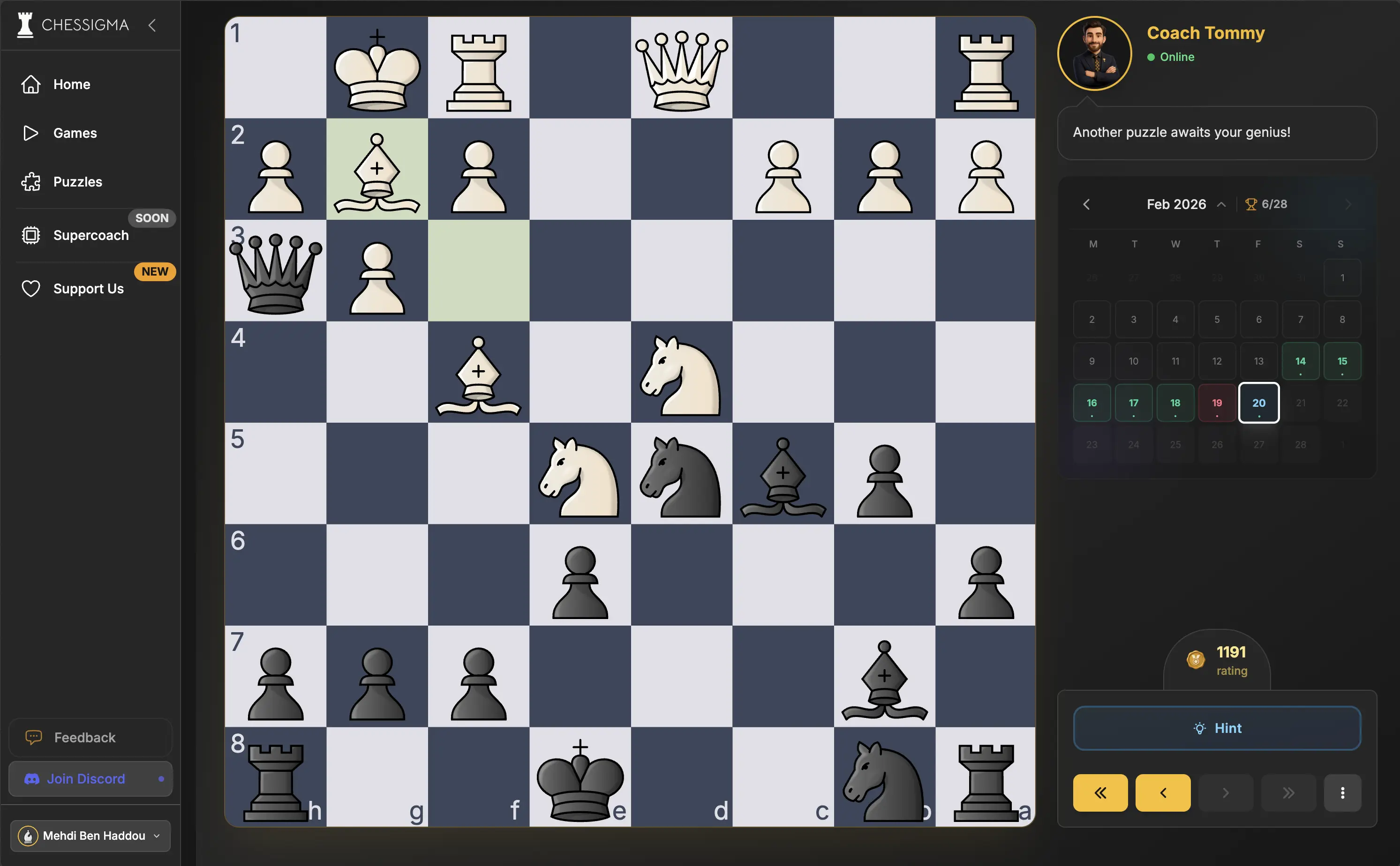
Daily chess puzzles are the single most effective training habit you can build. Most players grind 100 puzzles in one sitting, disappear for a week, then wonder why their rating is stuck. Here's the truth: one chess puzzle daily, done consistently, beats marathon sessions every time.
Why One Daily Chess Puzzle Beats Doing 100 in One Sitting
One focused puzzle per day is better than 100 rushed ones per week. The ideal number? One to five daily chess puzzles with full concentration. That's it. Quality destroys quantity when it comes to tactical training, and the research on spaced repetition backs this up completely.
Your brain doesn't consolidate patterns during the puzzle session itself. It does it during sleep. When you solve a tricky pin today, your brain processes that pattern overnight and wires it into long-term memory. Solve that same pattern buried in puzzle #87 of a marathon session? Your brain was already running on fumes by puzzle #25.
Studies on pattern recognition show that fatigue degrades tactical vision after 20-30 puzzles. You start guessing instead of calculating. You click the first move that looks reasonable instead of verifying the whole line. That's not training - that's building bad habits.
Consistency builds genuine intuition. When you solve one puzzle every single day for a month, you create 30 distinct learning events with 30 overnight consolidation cycles. Do 100 puzzles in one sitting and you get exactly one. The math is brutal, but it's honest.
What Happens to Your Chess After 30 Days of Daily Puzzles
Week 1 feels slow. You're solving the puzzle, maybe getting it right, but it doesn't feel like anything is clicking yet. That's normal. Your brain is laying the foundation.
Week 2 is where things start shifting. You'll notice you're recognizing patterns faster. A knight fork setup that would have taken you 3 minutes to spot now jumps out in 30 seconds. You start seeing the geometry of the board differently.
Weeks 3-4 - this is the payoff. You'll start spotting pin patterns before your opponent even sets them up. You'll see a rook lift coming two moves early. You'll catch yourself thinking "that bishop is undefended" mid-game without consciously looking for it. The patterns have moved from deliberate calculation to automatic recognition. That's when your actual game results start changing.
How Chessigma's Daily Chess Puzzle Works
One new puzzle drops every day, calibrated to challenge you without crushing you. Solve it, and your streak counter goes up. Miss a day, and it resets. Simple.
The streak system tracks your consecutive days solved - and here's what makes it stick: streaks are visible on the Chessigma Discord. Public accountability actually works. When your Discord friends can see your 15-day streak, you're a lot less likely to skip today's puzzle.
The whole thing takes 5 minutes max. No backlog guilt - there's no pile of missed puzzles waiting for you. Just today's puzzle, done or not done. Free, no account required to try.
How to Get the Most Out of Your Chess Puzzle of the Day
- Do it at the same time every day. Morning works best - fresh brain, no decision fatigue. Pair it with your coffee and it becomes automatic within a week.
- Spend at least 2 minutes thinking before moving. Don't just guess. Look for checks, captures, and threats. Calculate the whole line before you touch a piece.
- After solving, check for alternative solutions. The puzzle might have one "correct" answer, but finding other candidate moves strengthens your calculation skills.
- If you fail, don't skip - study it. Understanding why you missed a tactic is more valuable than getting the next puzzle right. That failure is your biggest learning opportunity.
- Track your streak as consistency, not skill. A 30-day streak means you showed up 30 days in a row. That discipline matters more than whether you solved every puzzle correctly.
Want to go deeper? After your daily puzzle, you can analyze your games to find the tactical patterns you keep missing. And if you want more puzzle volume on top of your daily habit, check out our free chess puzzles for unlimited practice.
Start Your Chess Puzzle Streak Today
You don't need a training plan. You don't need a coach. You need one puzzle, every day, starting now. Build the streak. Let chess puzzles daily become the habit that finally moves your rating.
Frequently Asked Questions
How many chess puzzles should I do a day?
One to five puzzles with full focus beats doing 50 on autopilot. The key is consistency, not volume. Solve one daily chess puzzle with real concentration - calculate the full line before moving - and you'll improve faster than someone grinding 100 puzzles in a single sitting with diminishing attention.
Do daily chess puzzles actually help?
Yes - if done consistently. Spaced repetition research shows that daily practice creates stronger neural pathways than cramming. One puzzle per day gives your brain 30 overnight consolidation cycles per month. A marathon session gives you one. Players who maintain a daily habit see measurable tactical improvement within 3-4 weeks.
What is the best daily chess puzzle site?
Chessigma offers a free daily chess puzzle with a streak system and Discord community accountability. Unlike Chess.com's paywall or Lichess's lack of structured daily challenges, Chessigma gives you one curated puzzle per day, tracks your consecutive days, and makes your streak visible to your community. No account required to start.
How does the Chessigma daily puzzle streak work?
A new puzzle appears every day. Solve it and your streak counter increases by one. Your streak tracks consecutive days solved - skip a day and it resets to zero. Streaks are shared on the Chessigma Discord server, adding public accountability that keeps players coming back. There's no backlog; just today's puzzle.
What happens if I miss a day on my puzzle streak?
Your streak resets to zero. That's the point - the streak is a consistency tool, not a punishment. If you miss a day, just start again tomorrow. Most players find that losing a streak once makes them more committed to maintaining the next one. The goal is building the daily habit, not achieving a perfect record.