Free Unlimited Chess Puzzles No Paywall, No Daily Limit
Chess.com gives you 5 puzzles a day then hits you with a paywall. Chessigma gives you free unlimited chess puzzles 4 million of them with Elo tracking, zero ads, and no account required. Chess unlimited puzzles, the way training should work.
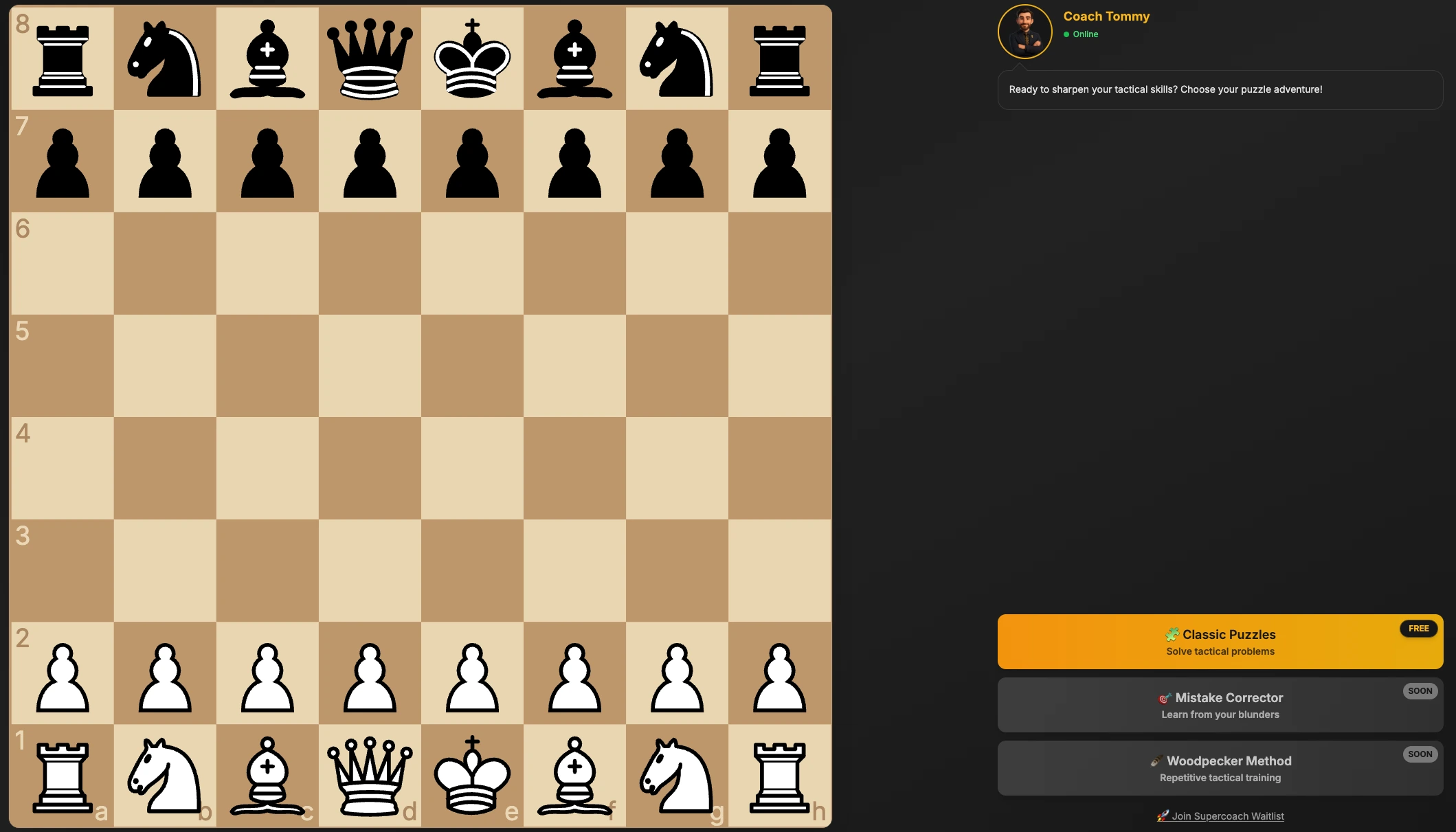
How Our Chess Puzzle Trainer Works
Every puzzle on Chessigma is matched to your Elo level. When you start solving, you get a starting rating based on your skill. Solve a puzzle correctly and your rating goes up. Miss it and your rating drops. You always face puzzles at the right difficulty never too easy to bore you, never too hard to frustrate you.
Your puzzle Elo updates in real time after every attempt. Each correct solution earns rating points proportional to the puzzle's difficulty. Solve a hard puzzle above your level and you gain more. Fail an easy one and you lose more. The system self-corrects quickly, so after a few puzzles it knows your level.
Your rating history tracks your improvement over time. See where you started, how fast you're climbing, and whether your tactical pattern recognition is actually getting sharper. It's the difference between mindless repetition and deliberate practice.
Unlimited Chess Puzzles Why It Matters
Chess.com gives you 5 free chess puzzles per day. After that, you hit a paywall. Want more? Pay for a Diamond subscription. For a training tool that should be fundamental to every player's improvement, that's a rough deal.
Lichess offers unlimited puzzles for free, and credit to them for that. But the interface is cluttered, the UX feels dated, and navigating between puzzle modes isn't intuitive for newer players. If you just want to sit down and solve tactics, there's friction.
Chessigma gives you unlimited free chess puzzles with a clean, focused interface and real Elo progression. No account wall, no daily cap, no ads interrupting your flow. Just the chess puzzles Chess.com should have made free years ago.
Here's why unlimited access matters: pattern recognition is built through volume and consistency. You can't develop tactical vision solving 5 puzzles a day. You need the freedom to do 10, 20, 50 in a session when you're in the zone. Infinite chess puzzles mean you train on your schedule, at your pace, without an arbitrary limit cutting you off mid-session. That's how real improvement happens.
What Is Chess Puzzle Elo and Why Does It Matter
Chess puzzle Elo is a numerical rating that measures your ability to solve tactical chess positions correctly and quickly. It uses the same Elo system as competitive chess ratings but applies specifically to puzzle-solving performance, adjusting up or down after each attempt based on whether you found the correct move.
Your puzzle Elo is separate from your game Elo and usually differs significantly. Most players rate 200 to 400 points higher in puzzles than in games because puzzles isolate tactics without time pressure or positional complexity.
Here's what the ranges mean in practice. Under 1000 means you're still building basic tactical awareness forks, pins, and simple checkmates. 1000 to 1500 indicates solid pattern recognition with room to grow in calculation depth. 1500 and above means you're spotting multi-move combinations and handling complex tactical sequences.
Having an accurate puzzle rating matters because it ensures you always train at the right difficulty. Random puzzles waste time too easy and you learn nothing, too hard and you guess. Elo-matched puzzles sit in the sweet spot where you're challenged but capable, which is exactly where learning happens fastest. If you're new to tactics, start with chess puzzles for beginners to build your foundation.
How Many Chess Puzzles Should You Do a Day
Do 10 to 15 chess puzzles per day for consistent improvement. That's about 15 to 20 minutes of focused practice. It builds tactical pattern recognition without burning out. Consistency matters far more than volume daily practice beats marathon sessions every time.
The research on spaced repetition backs this up. Your brain encodes tactical patterns better when you see them regularly in short bursts rather than cramming 100 puzzles once a week. Think of it like gym training: frequent moderate sessions build more strength than rare intense ones.
Mix difficulty levels within your daily session. Start with a few mate in 2 puzzles to warm up, then move to mate in 3 puzzles and tactical combinations at your Elo. When you're ready for a real challenge, try hard chess puzzles that push you above your comfort zone. Make it a habit check the daily chess puzzle at chessigma.com/daily to stay on track.
Frequently Asked Questions
Are the chess puzzles really free and unlimited?
Yes. Chessigma has zero daily limits, zero paywalls, and zero subscription requirements. Solve as many puzzles as you want, whenever you want. We use the Lichess puzzle database over 4 million puzzles and run everything client-side. No server costs per puzzle, so there's no reason to charge.
How does the chess puzzle Elo system work?
Every puzzle has a difficulty rating. Solve it correctly and your Elo goes up. Fail and it goes down. The points gained or lost depend on the puzzle's rating relative to yours beat a harder puzzle and you gain more. The system calibrates quickly after about 10 puzzles.
Do I need an account to solve puzzles?
No. Start solving immediately without signing up. Your puzzle Elo and progress are saved locally in your browser. If you want to sync your rating across devices or appear on the global leaderboard, creating a free account takes 10 seconds.
How is this different from Chess.com puzzles?
Chess.com limits free users to 5 puzzles per day and locks the rest behind a paid subscription. Chessigma gives you unlimited chess puzzles with Elo tracking for free. Both platforms use quality tactical positions, but only one puts a paywall between you and your training.
What types of chess puzzles are available?
The database covers every major tactical theme: forks, pins, skewers, discovered attacks, back rank mates, deflections, decoys, and more. Puzzles range from simple one-move tactics to complex multi-move combinations. Difficulty scales from beginner (under 800 Elo) to expert (2500+).
Are there chess puzzles for beginners?
Absolutely. The Elo system automatically matches you to puzzles at your level. Starting out, you'll get straightforward tactics like basic forks and simple checkmate patterns. As your recognition improves, difficulty scales with you. No need to manually select a tier.
How many chess puzzles should I do a day?
Aim for 10 to 15 puzzles daily about 15 to 20 minutes of focused practice. Consistency beats volume. Solving a moderate number every day builds pattern recognition faster than binge-solving 100 puzzles once a week. Make it a daily habit.
What is a good chess puzzle rating?
Around 1000 to 1200 is solid for casual players. Intermediate players typically sit between 1200 and 1600. Above 1800 puts you in strong tactical territory. Puzzle ratings run higher than game ratings a 1500 puzzle Elo doesn't mean you're a 1500-rated player.
How it works

4+ Million Puzzles
Powered by the Lichess puzzle database. Forks, pins, skewers, discovered attacks, back rank mates. All the patterns you need, rated by difficulty.
Track Your Elo
Every puzzle you solve affects your rating. Watch your Elo climb as your pattern recognition improves. See exactly where you stand.

Climb the Leaderboard
Compete with players worldwide. See how you rank against others and push yourself to climb higher. Updated in real-time.
Built by Chess Players
We're two engineers from Belgium with backgrounds in the biggest tech companies who wanted better Chess tools.


We know how to ship great products, fast.