

Is Using Chess AI Cheating? Where the Line Actually Is
Using a chess AI during a rated game gets accounts closed. Using it after the game is how titled players train. Here is exactly where the line sits.
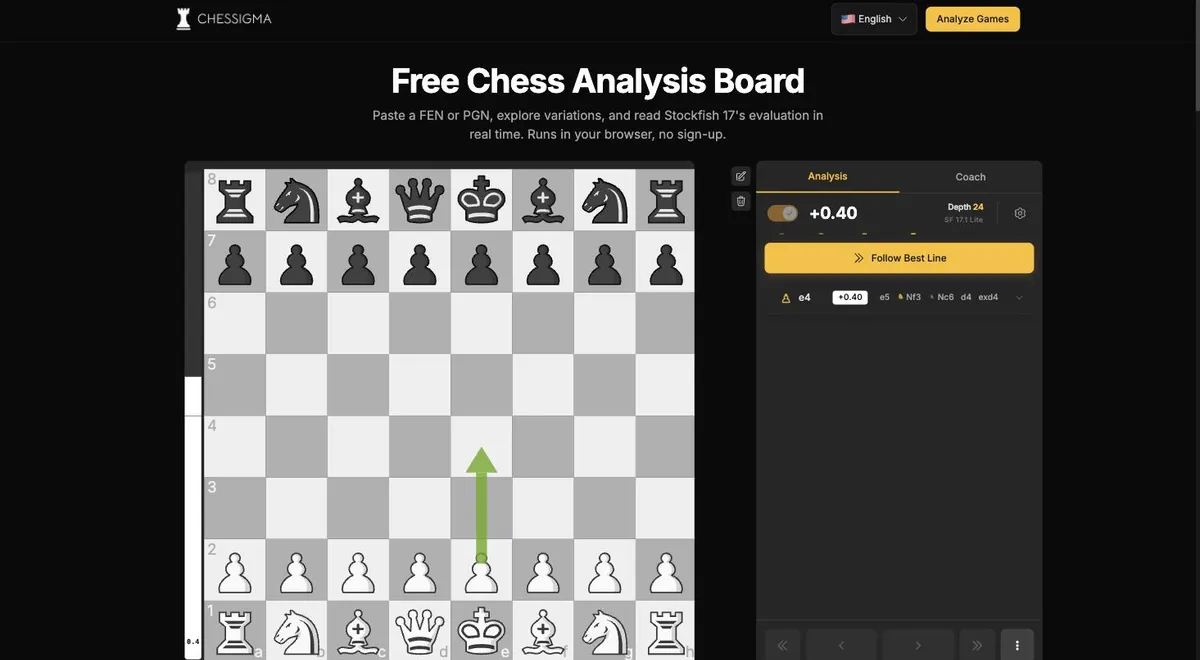
Using a chess AI during a rated game is cheating, and it ends accounts. Using the same chess AI five minutes after the game is the most normal training habit in the sport. Nothing about the tool changes in those five minutes. What changes is whose moves are on the board. The line is the clock, not the software.
Analyze the game you just finished
Chessigma runs unlimited Stockfish analysis on your games for free, in your browser, with no signup. The legal way to use an engine starts one move after the handshake.
Review My Games FreeThe line is the clock, not the tool
Every major platform draws the same boundary: the moment a rated game starts, you play alone. The moment it ends, every engine on earth is yours. The confusion around "is chess AI cheating" almost always comes from mixing up these two windows, so here they are side by side:
| Scenario | Verdict | Why |
|---|---|---|
| Engine open during a rated game | Cheating | The moves stop being yours. Account closure on every major site. |
| Glancing at an eval bar of your own live game | Cheating | An evaluation is engine assistance even without a suggested move. |
| Engine analysis after the game | Training | Allowed everywhere. This is how titled players study. |
| Engine on an analysis board | Training | No opponent, no stakes. Consulting the engine is the whole point. |
| Opening books in correspondence games | Format-dependent | Allowed in Daily/correspondence play, banned in Live. See the gray zones below. |
What Chess.com and Lichess actually ban
Neither site is vague about this. As of publication, both policies name the tools and the consequences explicitly:
- Chess.com: no chess engines, software, bots, plugins, browser extensions, or any tool that analyzes positions during play. Violations mean the account can be closed and publicly labeled as closed for fair-play violations. There are no warnings for cheating.
- Lichess: cheating is defined as any external assistance during play, including engine help, endgame tablebases, and asking another player. Violations get the account publicly marked as having violated the Terms of Service.
- Both: post-game analysis with an engine is fully allowed. Both sites ship their own built-in engine analysis precisely because reviewing finished games is expected behavior, not an exploit.
The scale of enforcement is worth sitting with. By Chess.com's own fair-play reporting, the site closes more than 100,000 accounts every month, and nearly 40% of closed accounts are two weeks old or less. Cheating with a chess AI is not a clever edge case the platforms haven't thought about. It is the one behavior both sites keep standing teams to hunt.
How cheat detection works, at a high level
The platforms keep their exact methods private, for obvious reasons, but the public outline is consistent: detection is statistical, server-side, and runs across your whole game history rather than any single game. The models compare the moves you play against what engines choose in the same positions, and they weigh that evidence over dozens or hundreds of games.
- Move matching: how often your choices align with top engine lines, weighted by how hard those moves are for a human of your strength to find.
- Error signature: every rating band has a measurable mistake profile. Play that carries far less error than your rating implies raises a flag, especially in sharp positions.
- Timing patterns: humans burn clock on hard decisions. Uniform move times through wildly uneven positions do not look human.
- History and context: sudden performance jumps, results out of line with years of prior play, and behavior signals around the games themselves.
None of this depends on catching one smoking-gun move. It is an accumulation of probabilities, which is why closures happen at the scale they do and why appeals rarely overturn them.
Why engine-perfect play gives you away
Engines don't play chess the way strong humans do, they play it the way nothing else does. Stockfish will retreat a well-placed knight to a corner because of a pawn break nine moves away. It defends lost-looking positions with cold, only-move precision for twenty consecutive turns. It never plays a natural-but-slightly-wrong developing move, which is the bread and butter of human chess at every level below grandmaster.
A 1400-rated player who navigates a chaotic middlegame with near-zero centipawn loss doesn't look like a 1400 having a great day. Great days move you up one class. They do not move you up two thousand points of playing strength for exactly one game and then vanish. The statistical gap between "inspired human" and "engine" is enormous, and it is the easiest gap in chess to measure.
This is also why cheating fails as a strategy even before detection catches up. The moves were never yours, so nothing transfers to your next game. You inherit the rating of a player you cannot beat.
The gray zones: books, tablebases, and eval bars
A few tools sit close to the line, and the sites answer each one specifically:
- Opening books and databases: allowed in Daily/correspondence formats on Chess.com (the policy names the Opening Explorer) and in correspondence games on Lichess. Banned in Live play on both. Memorize lines before the game instead; that has been legal since chess books existed.
- Endgame tablebases: Lichess lists them as forbidden external assistance during play. After the game, probe them all you like.
- Eval bars and streams: watching any live evaluation of your own ongoing game counts as assistance, even if no move is suggested. Knowing the position is winning is information you didn't compute.
- Another human: asking a stronger player mid-game is the oldest form of outside help and both policies treat it the same as an engine.
The legitimate workflow: play clean, analyze with AI, drill the leaks
Here is the loop that takes everything a chess AI is good at and keeps your account alive. It is the same loop titled players run, just with free tools:
- 1. Play the game with your own head. Wins and losses both count; the losses are usually worth more.
- 2. Import it into a free analyzer the moment it ends. Chessigma grades every move with Stockfish 17, unlimited and without a signup.
- 3. Stop at the two or three moments where the evaluation swung. For any single position you want to interrogate, paste it into the free chess AI next-move calculator and compare the engine's choice with what you played.
- 4. Name the recurring mistake. Not "I blundered" but "I push pawns in front of my own king when I'm impatient."
- 5. Drill that exact pattern until it stops appearing in your reports, then move to the next one.
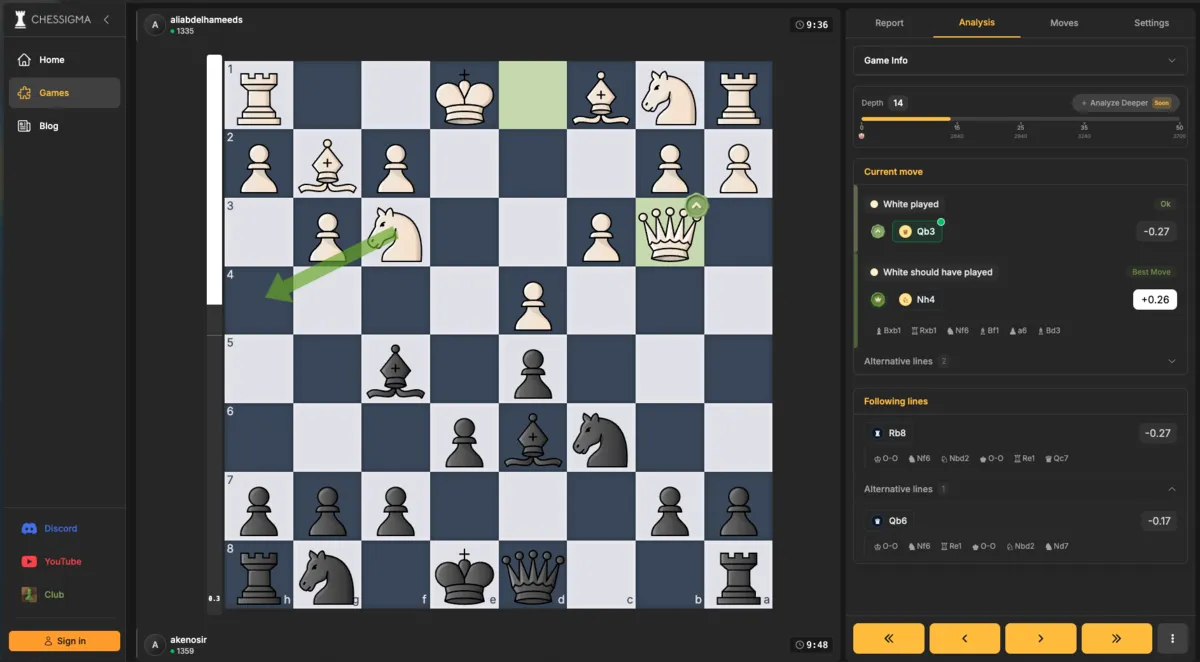
Run this loop after every session and you get the thing the cheater never gets: the engine's judgment slowly becoming your own. For a deeper walkthrough of step 3, our guide to the chess AI helper workflow covers how to question the engine instead of obeying it.
What happens if you get caught
The consequences are public, immediate, and mostly permanent:
| Platform | What happens |
|---|---|
| Chess.com | Account closed without warning, optionally labeled publicly as a fair-play closure. Ongoing games are awarded to your opponents. |
| Lichess | Account publicly marked for violating the Terms of Service. Recent opponents automatically receive rating refunds. An appeal process exists, but the mark stands unless it succeeds. |
| Everywhere | Your rating history, friends list, and stats go down with the account. Starting over on a new account with the same habits produces the same ending. |
Meanwhile the legal path costs nothing. If you want to see what modern chess AI can do for your game, start with a comparison of the best chess AI tools and point all of them at your finished games.
Turn a year of your games into a training plan
The Supercoach AI studies 12 months of your games, finds the mistakes you repeat, and builds drills around them. All the power of a chess AI, aimed at the only place it is allowed: your improvement.
Meet the AI SupercoachFrequently Asked Questions
Is it cheating to analyze my chess games with an engine after they end?
No. Post-game engine analysis is allowed on every major chess site and it is the standard way players at every level train. The fair-play policies on Chess.com and Lichess target assistance during play. Once the game is over, running it through Stockfish or a chess AI is studying, not cheating.
Can chess sites detect if I only use an engine for a few key moves?
Yes. Selective assistance is exactly what statistical detection models are built to find, because the moves a player would outsource are the hardest ones, and those are the positions where human choices and engine choices diverge the most. Detection systems compare decision quality across many games, so a handful of impossible moves at critical moments stands out rather than blending in.
Is using a chess AI against a bot or on an analysis board cheating?
Fair-play policies are about games against other people. Analysis boards exist so you can consult an engine freely, and casual bot games with built-in hints are a product feature, not a violation. The rule of thumb: if a human opponent is staking rating points on the game, no outside help of any kind.
Do I get rating points back after losing to a cheater?
Often, yes. When Lichess marks an account for violating its terms of service, it automatically refunds rating points to recent opponents who lost or drew against it. When Chess.com closes an account for fair-play violations, that account's ongoing games are awarded to the opponents. Neither refund requires you to file anything.
Are opening books and databases cheating?
It depends on the format. As of publication, Chess.com allows the Opening Explorer and other books in Daily (correspondence) chess only, never in Live play. Lichess similarly permits opening books in correspondence games but treats them as forbidden external assistance in real-time games. Engines and tablebases stay banned during play in every format on both sites.