
Chess Brain Games
Your results
Leaderboard
Chess brain games
Short tests of chess memory, board vision and calculation, played on a real board. Each run takes a minute or two and ranks you against other players.Short tests of chess memory, board vision and calculation, played on a real board. Each run takes a minute or two and ranks you against other players.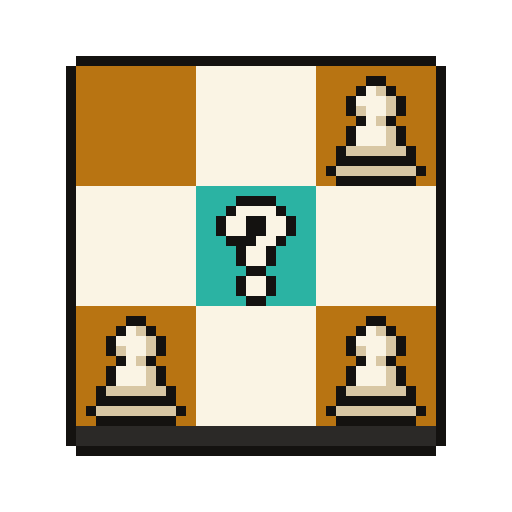
Brain tests
Classic brain tests anyone can play, no chess needed: reaction time, memory and logic. Each one points to its chess version when you finish.Classic brain tests anyone can play, no chess needed: reaction time, memory and logic. Each one points to its chess version when you finish.
Chess brain games: memory, vision and speed
Chess brain games are short tests played on a real chessboard. Each one measures one thing: how many squares you can remember, how fast you find a square or a check, how far you can follow moves once the pieces are hidden. A run takes a minute or two, needs no signup and ends on one number.
Beside them sit brain tests that need no chess at all: a reaction time test, the Queens game and a card matching memory game. Each one points to its chess version when you finish.
How your score is ranked
Every result lands on a curve of how players do on that game. Four tiers sit at the same place in every game: Club 1500 is the top quarter, Expert 2000 the top tenth, Master 2300 the top twentieth and GM the top 1%. Blunder Crash is the exception, ranked on its leaderboard only.
A tier names a strength, not a rating. To work out a rating from your game results, use the Elo calculator.
The games
Chess brain games
- Board Memory: a visual memory test with pawns that flash, then vanish.
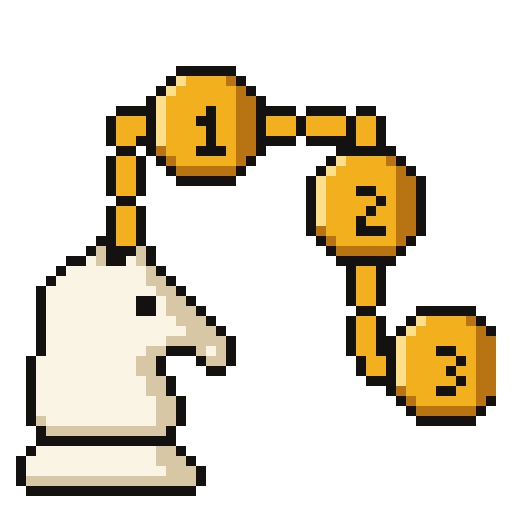
- Knight Trail: a sequence memory test where you replay a knight's route.
- Blind Moves: a blindfold chess trainer that starts with one move you can watch.
- Square Rush: a chess coordinates trainer against a 30 second clock.
- Find the Check: tap the piece giving check, timed in milliseconds.
- Mate Rush: a free checkmate puzzle rush, two minutes of mates.
- Spot the Change: study a position, then find every piece that changed.
- Legal or Not: an illegal chess move quiz on a shrinking fuse.
- Blunder Crash: cash out before a hanging piece is taken.
- Minefield: tap only the squares no black piece attacks.
Brain tests
- Reaction Time Test: a reaction time test, tap when the board turns green.
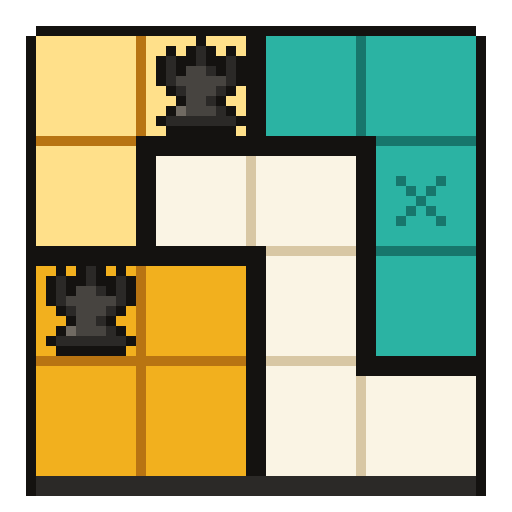
- Queens: the queens game, one queen per colour and none attacking another, unlimited grids.
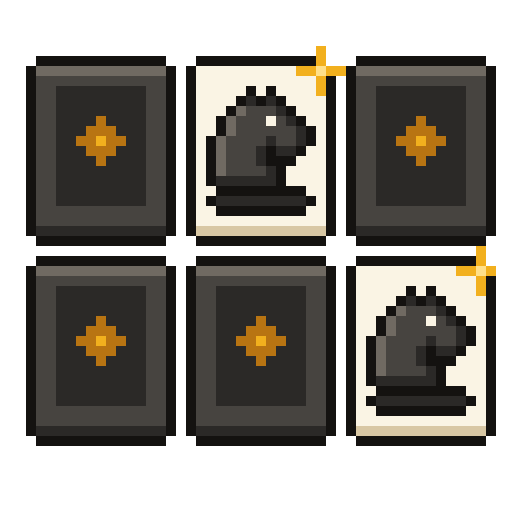
- Memory Match: a card matching memory game with chess piece cards.
Questions
Are these chess brain games free?
Yes. Every game is free to play with no signup. Signing in saves your runs and puts your bests on the leaderboards.
How is my percentile computed?
Your score is placed on the game's distribution of results, which gives the share of players you beat. Until there are enough real runs, each distribution is modeled from simulated players of every strength on the game's real levels.
Is this like Human Benchmark?
It follows the same idea: short tests that each give one number and a percentile. Most of these are played on a chessboard and ranked against chess strength tiers, and the brain tests that need no chess each lead to a chess version.
Do brain games make you better at chess?
They train parts of the game on their own: board vision, memory for positions, calculation without moving the pieces. They work best as a warm-up next to playing and reviewing your own games, not in place of it.